
Edinburgh Travel & Vacation Guide






Current Weather



Description
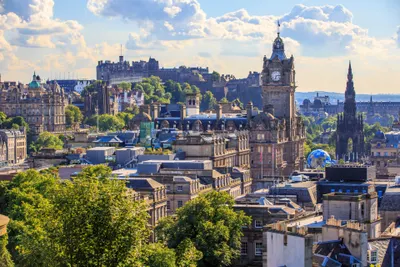
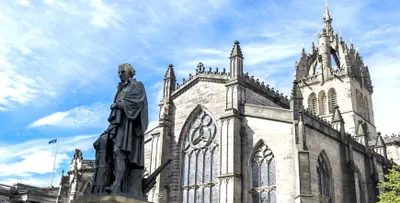
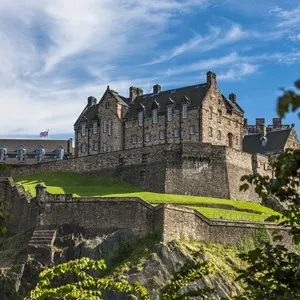
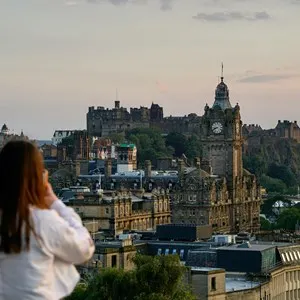
Edinburgh's origins can be traced back to the 7th century when it was settled by the Celtic Votadini tribe. By the 10th century, the city had become a prominent stronghold known as 'Dun Eideann' under Scottish rule. The construction of Edinburgh Castle atop Castle Rock in the 12th century solidified its power and played a crucial role in conflicts such as the Wars of Scottish Independence. In 1437, Edinburgh was officially declared the capital of Scotland. Over the centuries, Edinburgh thrived as a hub of trade and culture. The establishment of the University of Edinburgh in 1583 further enhanced its reputation as an intellectual centre. The 18th-century Enlightenment era brought significant advancements in various fields, with influential figures like David Hume and Adam Smith contributing to Edinburgh's intellectual legacy. In the 19th century, Edinburgh underwent a transformation during the Industrial Revolution. The city expanded beyond the boundaries of the Old Town with the construction of the Georgian New Town, showcasing stunning neoclassical architecture and becoming a UNESCO World Heritage Site. Edinburgh continued to evolve in the 20th century, facing both challenges and milestones. The city experienced significant growth and modernisation, with the establishment of renowned festivals such as the Edinburgh International Festival and the Edinburgh Festival Fringe, solidifying its reputation as a cultural capital. Today, Edinburgh stands as a thriving cosmopolitan city, blending its ancient heritage with a vibrant contemporary spirit. Its iconic landmarks, including Edinburgh Castle, Royal Mile, and Arthur's Seat, attract millions of visitors each year, while its world-class universities, dynamic arts scene, and bustling festivals contribute to its global appeal.
Useful information
564,000
Pound Sterling, £1 = 100 pence
999
112
Opening hours are usually Monday to Saturday 9am–6pm, and Sunday 11am–5pm
Do & See



Dining








Cafés




Bars & Nightlife







Shopping




Tourist Information




Frequently Asked Questions
The best time to visit Edinburgh is during the late spring and summer months, from May to September. This period offers warmer weather and longer daylight hours, perfect for exploring the city's attractions. Additionally, August is a vibrant month with the famous Edinburgh Festival Fringe, the largest arts festival in the world, and the Royal Edinburgh Military Tattoo, both attracting visitors from across the globe.
A stay of three to four days in Edinburgh is ideal to explore the main attractions. This allows time to visit iconic sites such as Edinburgh Castle, the Royal Mile, Holyrood Palace, and Arthur's Seat. You can also enjoy the city's museums, galleries, and the charming neighborhoods of Stockbridge and Dean Village.
Edinburgh is rich in historical and cultural landmarks. Must-see sites include Edinburgh Castle, perched atop Castle Rock, the historic Royal Mile, the elegant Holyrood Palace, and the picturesque Arthur's Seat for panoramic views. The National Museum of Scotland and the Scott Monument are also worth visiting.
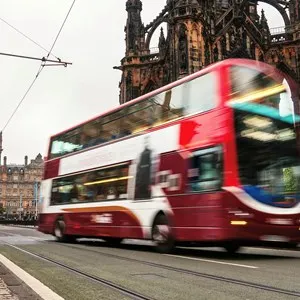
Edinburgh is a compact city, making it easy to explore on foot. For longer distances, the city offers an efficient public transportation system, including buses and trams. Taxis and rideshares are also readily available. Consider purchasing a day pass for unlimited travel on buses and trams.
While in Edinburgh, be sure to try traditional Scottish dishes such as haggis, neeps and tatties (turnips and potatoes), and Cullen skink, a hearty fish soup. For a sweet treat, sample shortbread or cranachan, a dessert made with raspberries, cream, oats, and whisky. Pair your meal with a dram of Scotch whisky for a true local experience.
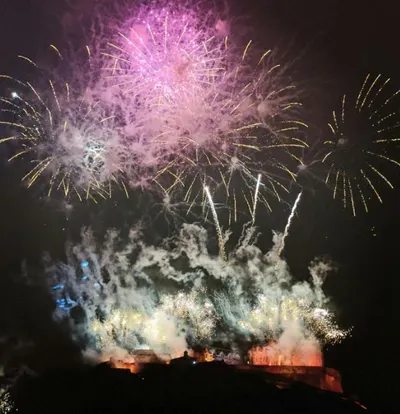
Edinburgh hosts several unique festivals throughout the year. The Edinburgh Festival Fringe in August is a must-see, offering a diverse range of performances. The Royal Edinburgh Military Tattoo, also in August, showcases military bands and performances against the backdrop of Edinburgh Castle. Hogmanay, the Scottish New Year celebration, is another highlight, featuring street parties and fireworks.
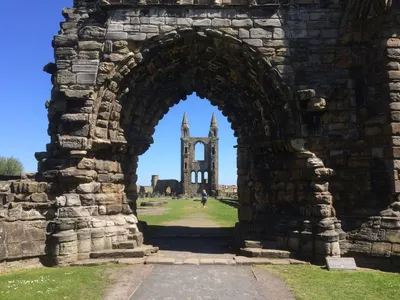
There are several excellent day trips from Edinburgh. Visit the historic town of St. Andrews, known for its golf courses and university. Explore the scenic landscapes of the Scottish Borders or the picturesque village of North Berwick, famous for its beaches and seabird center. The Rosslyn Chapel, featured in 'The Da Vinci Code,' is also a short drive away.
Trips