

Details for Tasmania








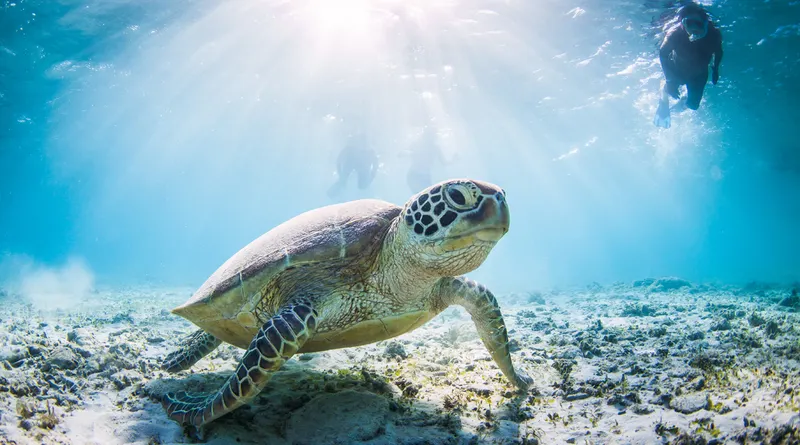
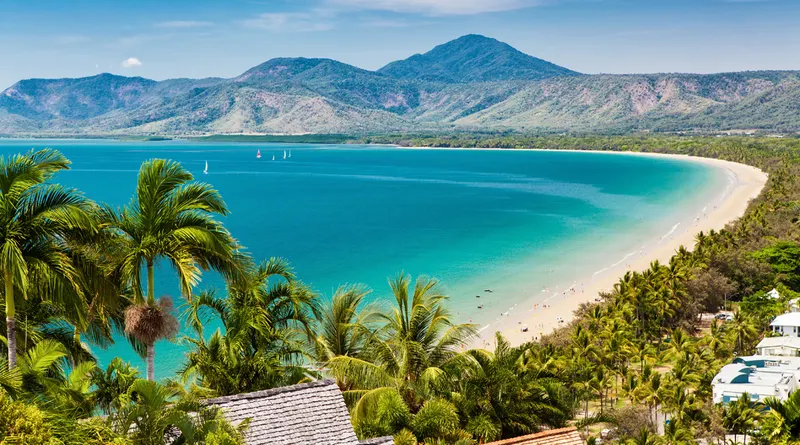
Risk-taking artists, passionate producers, inventive chefs and soulful heritage bring light and shade to Tasmanian towns. Hobart in the south and Launceston in the north are the two largest centres with Hobart being Tasmania's capital. Strahan is the major centre on the west coast and St Helens and Coles Bay are on the east coast.
571,165 (2022 estimate)
Australian Dollar (AUD)
Emergency (police, ambulance, fire brigade) dial 000
Most businesses open 9am–5pm. Check ahead when travelling regionally.
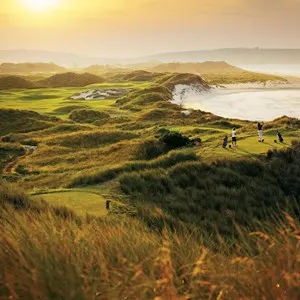
Barnbougle Dunes Golf Course
Barnbougle Dunes Golf Course
Barnbougle Dunes is a popular golfing destination on the coast of Bridport. Tee off to the sound of crashing waves on a links course where sweeping beaches, farmland and manicured greens mix effortlessly. Challenge yourself to 18 holes followed by a Tasmanian whisky in the clubhouse.
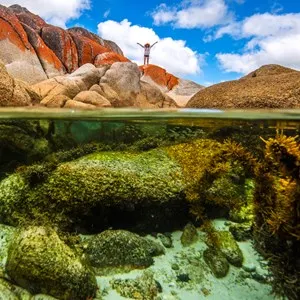
Bay of Fires
Bay of Fires
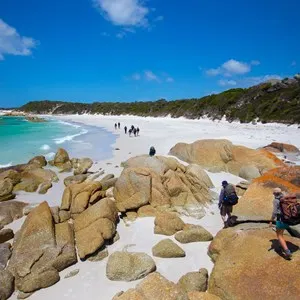
The Bay of Fires is a Tassie favourite. Here a ribbon of coves, rocky outcrops and empty beaches flow under azure skies. The Bay of Fires Conservation Area has clean white beaches, turquoise water and granite boulders splashed with bright orange lichen. Beach activities and bird-watching are popular and you may see a pod of dolphins cruise parallel to the beach. The area is known for its snorkelling and diving, with scenic reefs, corals, underwater caves and abundant sea life.
Bay of Fires Lodge Walk
Bay of Fires Lodge Walk
The Bay of Fires Walk covers a coastline where there are more extraordinary white sandy beaches than houses. Immerse yourself in the pristine coastal environment teeming with wildlife. Accommodation is uncomplicated and luxurious at either the beach camp or exclusive Bay of Fires Lodge, an airy seaside cliff top lodge overlooking the azure ocean and blazing orange boulders. Walk through the bush to the spa, beginning your spa experience with a soothing soak in the outdoor bathing pavilion.
Bicheno Penguin Tour
Bicheno Penguin Tour
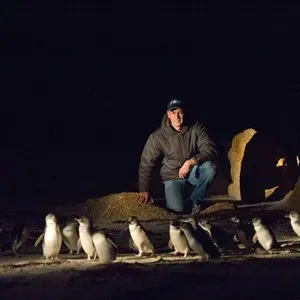
See wild little penguins emerge from the ocean and head for their homes in a natural rookery on an after-dark tour. Established by locals to protect the penguin population, the tour lets you get close to the penguins without disturbing their nightly journey. These are wild birds, so penguin numbers and arrival times vary with the life-cycle activity and weather, with larger numbers of 100-125 birds from September to January. You can expect to get very close to a penguin on this tour.
Blue Derby Mountain Bike Trail
Blue Derby Mountain Bike Trail
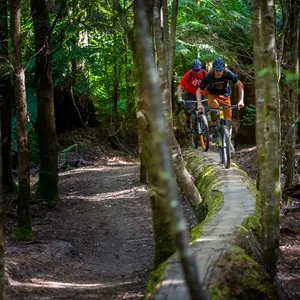
Riders worldwide are heading to Tasmania. Blue Derby is a network of trails that surround the town of Derby. Once the centre of a tin mining boom, these days it’s the mountain bikers carving up the dirt. Cruise to the top of the hill. Tear downhill as fast as you can. Repeat.
Bonorong Wildlife Sanctuary
Bonorong Wildlife Sanctuary
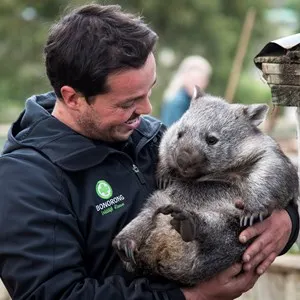
Bonorong offers a very hands-on experience, rare in other zoos and wildlife parks, allowing you to share special moments with Australia’s wildlife. Tasmanian devils are active during the day, so you can view them any time. The park also looks after wombats, koalas, echidnas, birds and many more Tasmanian natives.

Bridestowe Lavender Estate
Bridestowe Lavender Estate
Forty-eight hectares of rolling lavender fields bloom a blanket of purple on one of the world’s largest lavender farms. The five-week harvest begins in early January with the distillation and processing of the lavender in full swing. A tasting area allows you to experience the unique use of Bridestowe lavender as a subtle flavouring in superb quality foods. Sit and enjoy a coffee in the Bridestowe café or picnic under the century-old oak trees and stroll through the fields. The Bridestowe gift shop has lavender filled bears, lavender infused oils, lotions and potions and culinary lavender — so you can make your own lavender treats at home.
Cataract Gorge
Cataract Gorge
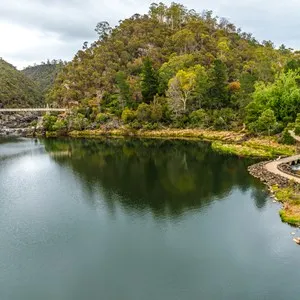
Laze away the day at Cataract Gorge Reserve only a few minutes from the centre of Launceston. There are peacocks and wallabies, rock climbing and a swimming pool at this popular urban playground. Follow a pathway along the cliff face looking down onto the South Esk River. On the shady northern side, known as the Cliff Grounds, is a Victorian garden with ferns and exotic plants. Wander across the footbridge and take a chairlift ride across the river.
60 Great Short Walks
60 Great Short Walks
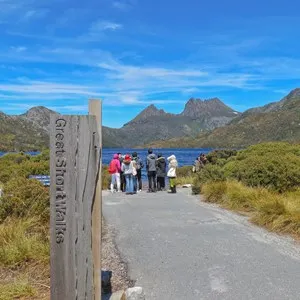
Tasmania is home to some of Australia's most iconic walks – the Bay of Fires, Maria Island, and of course, the Overland Track, to name a few. But one doesn't have to embark on a multi-day trek to experience the best of Tassie on foot. Work your way down the list of Tasmania's 60 Great Short Walks. They give just about anybody the chance to explore some of Tassie's most scenic and iconic regions, in walks ranging from about 20 minutes to a couple of hours.
ALL4 Quad Bike All Terrain Tours
ALL4 Quad Bike All Terrain Tours
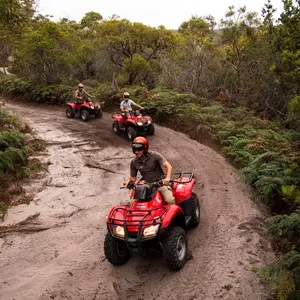
With four big rubber tyres beneath, accelerate up the sandy path on your way to the southern end of sweeping Friendly Beaches. As you wind through Eucalypt covered hills you might decide this is a terribly fun way to reach isolated nooks of the Freycinet Peninsula. Navigate boulder-filled valleys and drop into an abandoned mining cottage before reaching the coast. In true east coast style, your afternoon tea stop is a cracker with rolling turquoise waves and orange lichen laid out like a picnic rug across granite boulders. A thrilling quad bike adventure for those who seek a unique view of the Freycinet National Park.
Bruny Island
Bruny Island
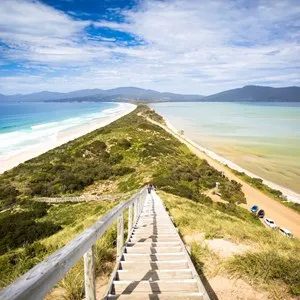
Bruny Island is known for its delicious produce and spectacular scenery. Taste fresh seafood, sample fine Tasmanian whisky, eat handmade fudge and chocolate, pick berries and sample artisan cheeses.
Central Highlands Fly Fishing
Central Highlands Fly Fishing
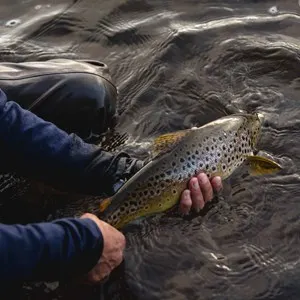
Tasmania is one of the last great wild fisheries. Glassy lagoons, remote highland lakes and freestone rivers provide seclusion and excellent dry fly fishing from September to May. There are over 3,000 lakes, rivers and streams in Tassie. You’ll be excited to discover almost all of them hold wild brown and rainbow trout. The varied terrain also creates some pretty memorable challenges.
Cradle Mountain Huts Walk
Cradle Mountain Huts Walk
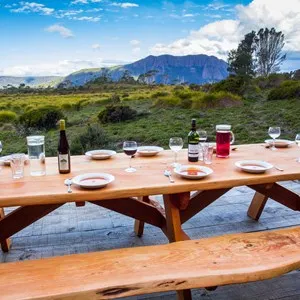
The Cradle Mountain Huts guided walk is a great opportunity to discover the dramatic landscapes and extraordinary diversity of the Cradle Mountain and Lake St Clair National Park within Tasmania's World Heritage Area. Following the iconic Overland Track, the walk extends from Cradle Valley to Lake St Clair through a variety of spectacular landscapes. In the evening, relax in the comfort of private huts, enjoy hot showers and three-course meals.
East Coast
East Coast
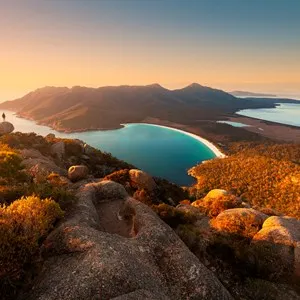
Along the east coast you can dine on plump oysters and other fresh seafood, sip wine with the winemaker at one of the wineries along the coast, kayak with dolphins or take the ferry to Maria Island — a wildlife haven set amongst natural beauty and convict history.
Flinders Island
Flinders Island
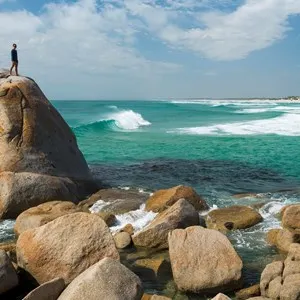
With only 900 residents, Flinders is largely untouched wilderness and sometimes eerily quiet — bordered by more than 120 deserted beaches and surrounded by at least 65 shipwrecks.
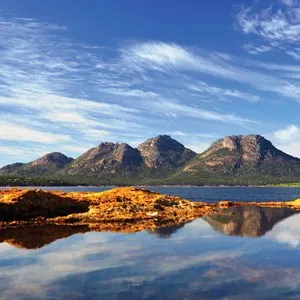
Freycinet National Park
Freycinet National Park
When you first arrive at Great Oyster Bay set against the backdrop of Freycinet National Park and the three pink-granite peaks of the Hazards mountain range — you know you're somewhere different (and special). Located on Tasmania's beautiful east coast, the Freycinet National Park occupies most of the Freycinet Peninsula. The 10,000 ha park is loaded with natural assets, including the granite peaks of the Hazards that dominate the Peninsula and the iconic and much-photographed Wineglass Bay. It is also a wildlife haven to Tasmanian pademelons, white-breasted sea eagles, and red-necked wallabies. There are long and short walks across the park to secluded bays, clean beaches and bird-filled lagoons.
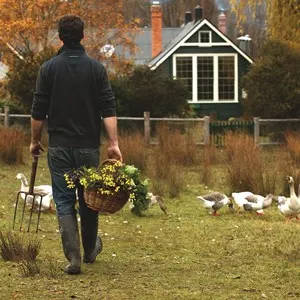
Agrarian Kitchen
Agrarian Kitchen
Pick your produce straight from the garden and rediscover the simple pleasures of preparing and eating freshly harvested ingredients at one of Tasmania’s boutique cooking schools.
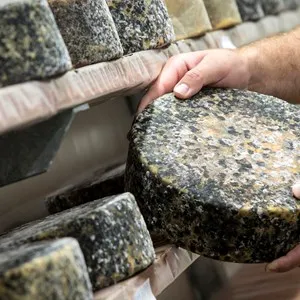
Ashgrove Cheese
Ashgrove Cheese
Visit Ashgrove Cheese Dairy Door, taste their award-winning fresh bottled milk, cream, butter and uniquely flavoured cheeses. Take a peek through the viewing window to the factory where the Bennett’s traditional cheese making processes still churn out their prize produce.
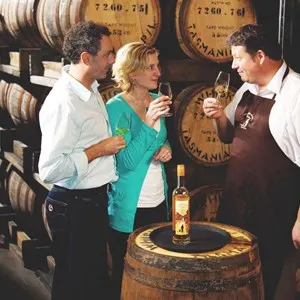
Cradle to Coast Tasting Trail
Cradle to Coast Tasting Trail
Let your tastebuds follow the Cradle to Coast Tasting Trail to growers, farm gates and cellar doors on a journey of gastronomic proportions. The trail is designed to help you discover the best artisanal producers this special region of Tasmania has to offer.
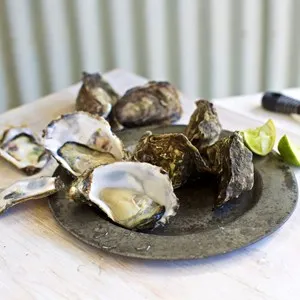
Freycinet Marine Farm
Freycinet Marine Farm
Nothing captures a sense of place more honestly than an oyster, and these oysters pulled from the nearby lagoon are just about as salty as they get — it's the farm's signature flavour.
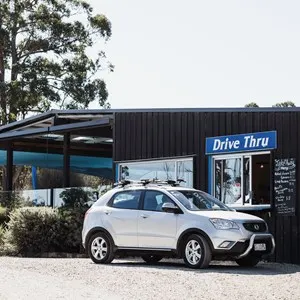
Get Shucked
Get Shucked
Get Shucked on Bruny Island goes through a few thousand dozen oysters each day. The oyster farmer mines them each morning from nutrient-rich waters that come straight from the wild Southern Ocean. There’s also an oyster drive-through if you prefer the rest of your shellfish on the run.
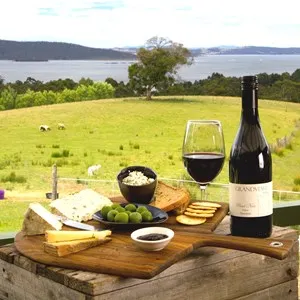
Grandvewe Sheep Cheesery & Hartshorn Distillery
Grandvewe Sheep Cheesery & Hartshorn Distillery
With sweeping views over the D’Entrecasteaux Channel, sample delicious sheep’s cheese. Then wash it down with a smooth vodka or spicy gin made from sheep’s whey. Each bottle is hand-sprayed black, handwritten and signed by the lead distiller, Ryan Hartshorn.

Hobart Dining
Hobart Dining
New restaurants and watering holes are popping up all over the city. Aloft and Waterline Brooke Street Pier Lounge Bar & Eatery bring a new sophistication to the waterfront. Then there’s Frank, Landscape, Templo, Fico, the list goes on. Plus there’s whisky bars, gourmet tours and cooking schools to tempt your taste buds.
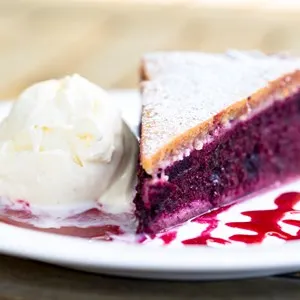
Kate's Berry Farm
Kate's Berry Farm
In Swansea at Kate’s Berry Farm, crispy hot waffles and a compote of poached berries go nicely with views across Great Oyster Bay. Acclaimed for her truly outstanding cool climate berries, Kate offers a unique range of mouth watering quality produce and products that highlight what Tasmania does so well.
Bangor Vineyard Shed
Bangor Vineyard Shed
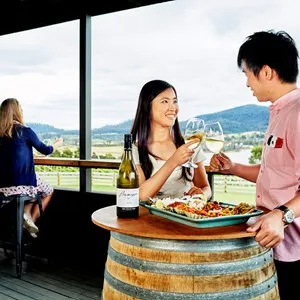
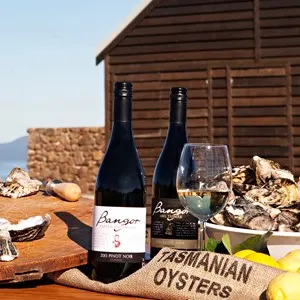
Stop at Bangor Vineyard Shed along the road to and from Port Arthur and indulge in oysters plucked from the waters before you and wine from vines growing just beyond the deck. Bangor is the cellar door for Bangor wines and the farm gate shop for Lease 170's oysters.
East Coast Wine Trail
East Coast Wine Trail
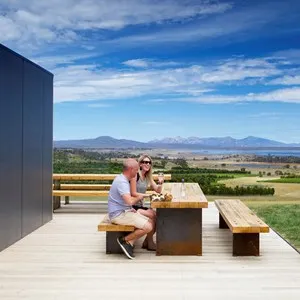
Tasmania’s east coast is picture-perfect. White sand beaches and open turquoise horizons. But it’s also a gourmet food bowl bursting with the best local fare matched with wines produced from the East Coast Wine Route’s boutique vineyards.

MONA's Void Bar
MONA's Void Bar
Prop yourself up at the bar for some of Hobart's best cocktails including the staples and some of those that have been forgotten.

Moorilla Cellar Door
Moorilla Cellar Door
Moorilla has developed in tandem with MONA, Museum of Old and New Art, with an emphasis on the production of wines that mirror Mona's overall philosophy.
North West Wine Trail
North West Wine Trail
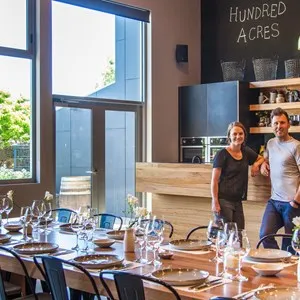
Some of Tasmania’s prettiest towns sit on this coastal edge, and so do a bumper crop of wineries. Sample and purchase direct from the producer at the North West vineyards.

Society Salamanca
Society Salamanca
Tucked away from the bustle of Salamanca, Society offers Hobart’s largest most extensive spirit library. Gin tastings platters highlight award-winning gin makers from around the island — each gin comes with a unique garnish designed to highlight key botanicals. All served up with house-made Tassie tonic.
Southern Wild Distillery
Southern Wild Distillery
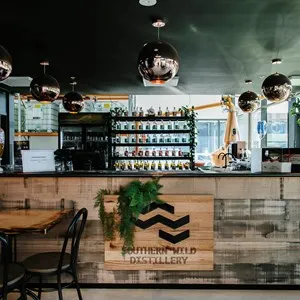
At Southern Wild Distillery in Devonport, food scientist turned distiller, George Burgess, takes you from the mountain to the meadows to the sea. Dasher + Fisher gins are named after two wild rivers that run from the snowmelt of Cradle Mountain. Let George take you on a flavour meander (by appointment), right where he makes the gin. Find out what producers he calls on to blend with his signature wakame, lavender and native pepperberry. Stay on for cocktails! Perhaps a gin mimosa starring Mountain Gin, Devil’s Corner sparkling and Spreyton Fresh orange juice?
Southern Wine Trail
Southern Wine Trail
Vineyards are closer to Hobart than any other capital city, including the Derwent Valley, Coal River Valley and the Huon and Channel wine growing areas.
Airports
Airports
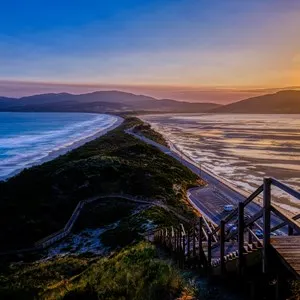
There are regular direct flights from major Australian cities to both Hobart and Launceston. Direct flights are also available from Melbourne to Wynyard (Burnie), Devonport, King and Flinders Island. Shuttle buses operate out of all Tasmanian airports.
Climate & Weather
Climate & Weather
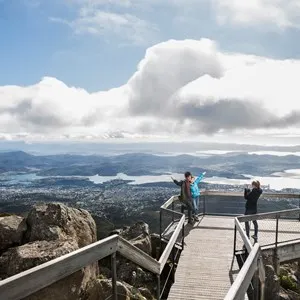
Tasmania has four distinct seasons with the warmest months being December to March. Regardless of where you travel in Tasmania you should be prepared for sudden, temporary deterioration in the weather, especially if bushwalking. Always carry additional warm clothing, including a waterproof outer layer.

Electricity
Electricity
Australia operates on a 230/240V supply voltage and 50Hz frequency. The country uses Type I power plugs, which feature two flat pins forming a 'V' shape, along with a grounding pin. This standard is also commonly used in New Zealand, Argentina, China, and several Pacific island nations. Remember to pack a universal adapter if your devices use a different plug type to ensure hassle-free charging.
Getting Around
Getting Around
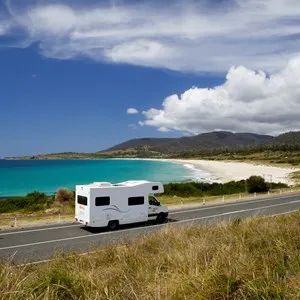
With good roads, few freeways or motorways and scenic views wherever you go, getting around Tasmania is part of the fun. Although Tasmania is a small state by Australian standards, it's actually the same size as Ireland, so don't underestimate the time it takes to get around. There are no train services in Tasmania so travellers rely on bus and coach and of course car-hire to get to and from our cities and regional centres. Coach tours offer a relaxing way of seeing the state. Specialised small escorted group touring is also available to cater for particular interests and the youth touring market.

Quarantine Requirements & Biosecurity
Quarantine Requirements & Biosecurity
Tasmania has some of the world's most stringent quarantine regulations. Please help us retain Tasmania's disease-free status by ensuring that when you visit you are not carrying or importing any restricted items. The introduction of a pest or disease into Tasmania could have a significant negative impact on our natural environment. A pest or disease finding its way into our world-renowned primary production areas could result in the need to implement expensive control measures, together with a significant loss of markets, and potential cost to primary industries and our community.
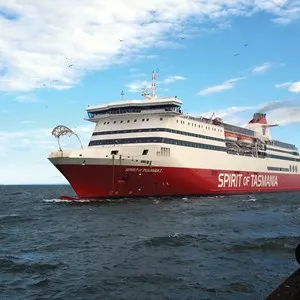
Spirit of Tasmania
Spirit of Tasmania
Crossing Bass Strait to Tasmania is easy. Wind back to island time early, travelling by sea on the passenger ship, Spirit of Tasmania. Departing from Melbourne and arriving in Devonport, this has the added benefit of letting you bring your own car and make the most of Tasmania's touring potential. Load your car up with luggage, golf clubs, fishing rods, camping equipment, and bikes — your epic island road trip begins as soon as you drive off the ship.

Let’s plan your next vacation
Let us take care of all the details to create the perfect trip for you. With our expertise and personalized service, we will ensure that every moment of your trip is special and unforgettable. Get ready to embark on a dream adventure!