

Details for Cologne
:no_upscale()/LocalImage/PictureLibrary/Europe-Mediterranean/Germany/City%20Shots/Germany,%20Cologne-01.jpg)
:no_upscale()/LocalImage/PictureLibrary/Europe-Mediterranean/Germany/Landmarks/Germany,%20Cologne,%20Cologne%20Cathedral-03.jpg)
:no_upscale()/LocalImage/Destinations/636021050924403748.jpg)

:no_upscale()/LocalImage/PictureLibrary/Europe-Mediterranean/Germany/City%20Shots/Germany,%20Cologne-01.jpg)
:no_upscale()/LocalImage/PictureLibrary/Europe-Mediterranean/Germany/Landmarks/Germany,%20Cologne,%20Cologne%20Cathedral-03.jpg)
:no_upscale()/LocalImage/Destinations/636021050924403748.jpg)
Metro area: 1,153,000 (2025)
Euro (EUR, €)
Police: 110
Fire brigade: 112
Ambulance: 112

Cologne Cable Cars
Cologne Cable Cars
Take a cable car ride over the Rhine and see Cologne from a different angle. You can start at either the Zoo or Rheinpark, making it easy to combine with a stroll or a visit nearby. The trip is short but offers great views—perfect for a sunny afternoon or just a relaxed way to cross the river.

Cologne Cathedral
Cologne Cathedral
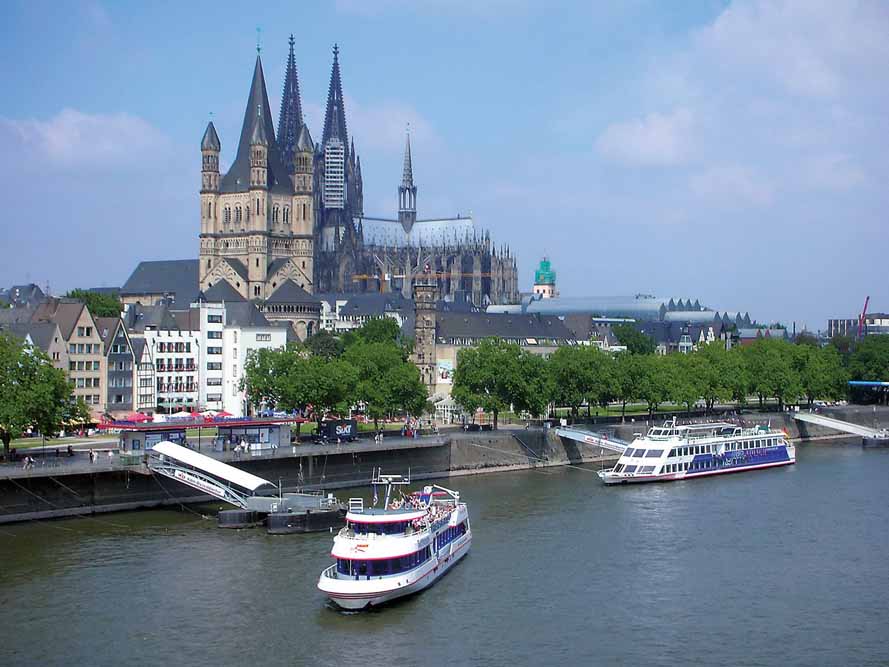
Construction on the Cologne Cathedral began in 1248, and it ended up being one of the biggest building projects of the Middle Ages. The idea was to make room for the waves of pilgrims coming to see the shrine of the Three Wise Men—yes, those Three Wise Men. Their supposed remains are kept in a gold casket near the altar, and it’s still the cathedral’s most prized relic.

Cologne Opera
Cologne Opera
Cologne’s main opera house stages a mix of classic and contemporary productions, from Mozart to modern composers. The resident company is strong, and visiting performers keep the programme varied. The building itself is modern and a bit divisive—some love it, some don’t—but the acoustics are excellent.

Cologne Triangle
Cologne Triangle
For a great view of the Cathedral and the city, head up to the rooftop platform at Köln Triangle. It’s over 100 metres up, so you get a full 360-degree look. The lift gets you there fast, and on a clear day, you can spot pretty far across the skyline.

Cologne Zoo
Cologne Zoo
One of Germany’s oldest zoos, and still a popular spot, especially if you're travelling with kids. It’s got a good mix of animals, from elephants and hippos to penguins and baboons. There’s a rainforest house and aquarium on site too. Feeding times are worth catching if you're around—check the schedule when you arrive.

Cologne's City Hall
Cologne's City Hall
While in Cologne, you can visit Germany's oldest city hall, with parts dating back to the 11th century. Over time, it has picked up a mix of styles—Gothic tower, Renaissance loggia, some modern touches. The 61-metre tower is covered in carved figures, including some cheeky ones from local history, and the bells chime four times a day. There’s also a mechanical face called the Platzjabbek that sticks its tongue out on the hour. Inside, the Hansasaal is the main historic hall—worth a look if it’s open.

Flora and Botanical Garden
Flora and Botanical Garden
This garden has been around since the 1800s and holds about 10,000 plant species. The main greenhouse is a highlight—step inside and it’s like a mini rainforest with tropical plants from South America and beyond.

Hohenzollern Bridge
Hohenzollern Bridge
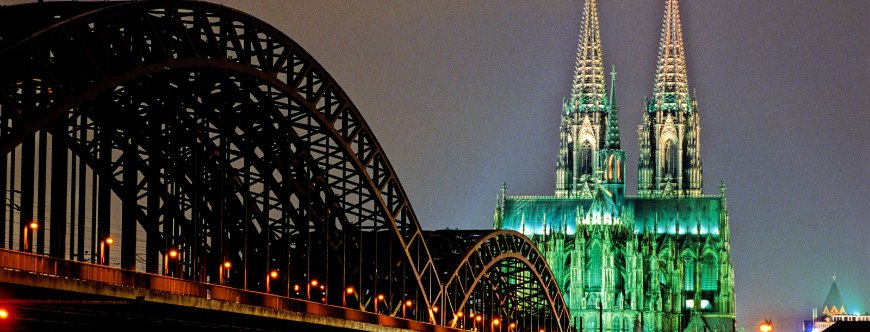
This railway and pedestrian bridge is one of the most recognisable spots in Cologne, and hard to miss if you’re near the Cathedral. Originally built in the early 1900s, it was rebuilt after being blown up in 1945. These days, most people come for the view and the thousands of love locks clipped to the railings. It’s a short, easy walk across the Rhine with some great photo angles of the city, especially at sunset.

Acht
Acht
Acht is a refined European-style eatery and wine bar, known for its industrial-chic interior, open kitchen, and relaxed courtyard terrace. It’s listed in the Michelin Guide for its solid, thoughtfully prepared dishes that blend regional produce with a French touch. Expect highlights like grilled octopus or a creamy fish stew, paired with a curated European wine selection of around 200 bottles.

Amabile
Amabile
Amabile serves French and Mediterranean-inspired dishes made with fresh, seasonal ingredients. The menu changes regularly, mixing local flavours with creative twists. It’s a relaxed spot if you want something a bit refined without the fuss.

Beirut
Beirut
Beirut is a family-run Lebanese eatery tucked away in Cologne’s Old Town. It’s known for its authentic flavours—house-made hummus, falafel, lamb skewers, shawarma, stuffed vine leaves and kibbeh, served in a cosy and colourful setting, with traditional decor and Arabic music in the background.

Brauhaus FRÜH am Dom
Brauhaus FRÜH am Dom
Perched right beside the Cathedral, FRÜH has been serving Kölsch straight from the barrel since 1904. It’s Germany’s second-largest brewery pub, with room for around 1,500 guests spread across a ground-floor restaurant, a series of cosy vaulted cellar rooms and a summer beer garden overlooking the Heinzelmännchenbrunnen. The menu features classic Cologne cooking—schnitzel, sausage, pork knuckle, pea stew, Halve Hahn and more—all made using time-honoured recipes. The servers (known as Köbes or Köbine) are fast and friendly, and keep the Kölsch coming until your coaster hides your glass.

Brauhaus zum Prinzen
Brauhaus zum Prinzen
Perched in one of the oldest buildings on Alter Markt—first mentioned in 1213—Brauhaus zum Prinzen still captures a sense of old Cologne, even after being rebuilt post-WWII and reopened by Gaffel in 1987. Inside, it’s all wood panelling and framed photos, with a cosy fireplace room, a raised gallery where they screen 1. FC Köln matches, and a busy bar out front. The menu sticks to local classics like schnitzel, currywurst, and Sauerbraten with dumplings, plus Kölsch-style tapas if you’re just after a snack with your beer. Gaffel Kölsch flows from the tap, and if you’re there when Köln scores in an away game, there’s a good chance someone will hand you a free one.

Bulgogi Haus
Bulgogi Haus
Bulgogi Haus is Cologne's go-to for Korean BBQ—literally grill your own at the table using real charcoal. It offers a set menu with marinated beef, pork belly, seafood and a buffet of banchan like kimchi, japchae and kimbap. The inside is casual and lively, and staff are helpful.

El Chango
El Chango
Hidden down Bolzengasse in Cologne's Old Town, El Chango is an Argentinian steakhouse where the kitchen’s star is a charcoal grill fired with real Argentine coals. The setting feels rustic and cosy—dark wood, simple tables, just enough Latin flair to hint at something special. Steaks come in portions from around 200 g up to hearty 500 g cuts, plus salads, fish or meat options, and a few desserts if you’ve got room.

Hans im Glück
Hans im Glück
Hans im Glück is a popular German burger chain that’s become a fixture across Cologne. The menus cater to everyone, with both classic beef and chicken burgers, as well as a strong selection of vegetarian and vegan patties. Beyond the burgers, there are salads, cocktails and house-made sauces, all in a relaxed, table-service setting.

Café Hibiskus
Café Hibiskus
Just off Hansaring in the Old Town, Café Hibiskus is a cozy, fully vegan café that feels like someone’s living room. They bake everything in-house—from raw cheesecakes to sweet and savoury pastries—all made with fresh, local ingredients and various plant-based milks.

Café Reichard
Café Reichard
Just steps from the Cathedral, Café Reichard is a spacious, long-standing spot perfect for people-watching—and cake. Split between an airy interior and a terrace with direct views of the west portal, it’s a popular pick on sunny days. The pastry team bakes a wide range of homemade cakes, pralines, truffles and Baumkuchen, and there’s a small savoury menu too. It feels proper rather than trendy, so expect generous portions and a steady stream of locals and tourists. It’s not cheap, but a seat here offers one of the best views in town.

Café Sehnsucht
Café Sehnsucht
Café Sehnsucht has been a staple in Ehrenfeld since 1982, running on a simple idea: regional, organic, seasonal—and homemade. They bake their own bread, cakes, jams and chocolate spreads, and keep things fresh with breakfasts inspired by the slow-food movement. Expect hearty sourdough toast, French toast, quiches, salads and daily savoury specials. There’s a cosy café area out front and a quiet winter garden out back that turns into an intimate restaurant at night.

Cafecafe
Cafecafe
Cafecafe is a bright, laid-back spot known for its creative breakfasts, hearty bagels, and fresh salads. It’s colourful and cosy inside, but if the weather’s nice, grab a seat on the shady terrace out front. It’s cash-only, so bring some euros, and if you go at peak time be ready for a bit of a wait—it’s popular for a reason.

Fassbender
Fassbender
Fassbender is one of Cologne’s oldest coffee spots, originally opened in 1830. Rebuilt in the 1950s after WWII, it still wears that retro look: rounded hall, cushioned walls, sofas, cocktail chairs—the kind of setting you'd expect from a classic European café. These days, it’s more pâtisserie than breakfast bar, specialising in pastries, cakes, quiches and sorbets. There’s a sense of timeless elegance, and it remains a favourite among both locals and visitors.

Funkhaus
Funkhaus
Funkhaus is a relaxed all-day café, bar and restaurant just a few minutes from Cologne Cathedral. Inside, it has a retro-modern vibe with plenty of space, and in summer, the outdoor terrace is a great spot for views of the spires. Breakfast is served daily until midday with hearty options like scrambled eggs and pancakes. Later in the day, the menu switches to German staples like currywurst, soups, and simple cakes, plus drinks in the evening.

Miss Päpki
Miss Päpki
Miss Päpki feels like stepping into a pastel daydream—vintage white chairs, delicate crockery, and soft floral details give it a light, romantic vibe. This quaint café serves seasonal homemade cakes (like brownie cheesecake or lemon tarts), sandwiches, quiches, salads and even house-brewed iced teas and lemonades in summer. You can grab a seat inside or head out to the terrace to watch the lively square unfold around you.

Restaurant Café Feynsinn
Restaurant Café Feynsinn
Tucked just off Rathenauplatz, Feynsinn is a cosy, lived-in spot with high ceilings, a touch of vintage charm, and a mix of regulars and brunch-goers. The menu leans creative and seasonal—vegan pancakes, shakshuka, fresh salads, and organic wines feature prominently. There’s a leafy terrace out front when the weather’s nice, and the place shifts easily from morning coffees to relaxed evening meals.

Biergarten Rathenauplatz
Biergarten Rathenauplatz
A small beer garden tucked in a quiet park just south of the Belgian Quarter. Grab a Kölsch and a snack from the Stadtgarten kitchen while chilling among the trees. They serve beer from the nearby Heller brewery—nice spot if you want to escape the buzz for a bit.

De.Lite
De.Lite
Tucked into the Belgian Quarter, De.Lite brings laid-back retro with its ’70s décor, cocktails, live music and weekend DJs. It’s small, cosy, and modulates its vibe depending on the night—jazz on Thursdays, DJs on weekends, and an occasional comedy set.

Hellers Volksgarten
Hellers Volksgarten
Step into the green heart of the Südstadt park, and you’ll find Hellers Volksgarten—a relaxed beer garden with a view of the lake you can paddle across. It’s one of the few places in Cologne pouring organic Kölsch and cloudy 'Wiess' straight from the Heller brewery. Food ranges from hearty German fare like schnitzel, sausages and spare ribs to seasonal salads and cakes. Beyond drinks and food, you’ll often catch events like midsummer bonfires, live jazz or sports screenings.

Live Music Hall
Live Music Hall
Live Music Hall is one of Cologne’s top mid‑size venues and club nights. It hosts everything from international concerts to themed DJ nights like ‘90s pop or hardcore. If you're in Cologne for live music or a good night out, this place is worth checking for whatever’s on the roster.

Red Cat Lounge
Red Cat Lounge
Red Cat is a compact but lively weekend spot on Luxemburger Straße. It blends bar, lounge, and club vibes—grab a Kölsch or a cocktail at the bar, then squeeze onto the dance floor once the DJ kicks things off.

Stadtgarten
Stadtgarten
Stadtgarten is a go-to spot in Neustadt park for live music lovers, with two main stages: the concert hall and Studio 672. They host around 400 events a year, from jazz and pop to electronic and spoken word. The onsite restaurant serves regional and veggie-friendly dishes, and the spacious beer garden is perfect for a relaxed drink during warmer months. In winter, they even run a cozy Christmas market with mulled wine and snacks.

Zülpicher Straße
Zülpicher Straße
Zülpicher Straße is one of Cologne’s main nightlife arteries, especially popular with students and younger crowds. It’s packed with bars, pubs, and late-night food spots—perfect if you want to kick off your night with cocktails or beer and keep going without ever leaving the street.

Zum scheuen Reh
Zum scheuen Reh
Zum scheuen Reh is an eclectic bar and music venue that offers a mix of live shows, DJ nights, film screenings, readings and art displays. Drinks cover the full spectrum, from craft cocktails and whiskey to local beers, but Thursdays are the highlight: Gin & Tonic day, with discounted prices and gin-tasting flights if you're keen to try new flavours.

Dufthaus 4711
Dufthaus 4711
4711 is the original Eau de Cologne and a true Cologne institution. The flagship store on Glockengasse has been selling its signature scent for over 200 years. You can pick up classic bottles as souvenirs or gifts, and check out the small in-house museum to learn more about the history of the brand and how the world-famous fragrance came to be.

Globetrotter
Globetrotter
Globetrotter is a massive four-storey outdoor and travel gear store located in the city centre, known for its unique features, including an indoor pool for testing kayaks, a cold chamber, and a climbing tunnel. It stocks high-quality brands, offers rentals and repairs, and even has a second-hand section, making it a great stop for adventure travellers or anyone into the outdoors.

Köln Arcaden
Köln Arcaden
Spread across three levels, Köln Arcaden is a large shopping centre packed with fashion chains, electronics stores, homeware shops, and a big REWE supermarket. There's also a food court with casual dining options and a kids’ play area.

Neumarkt Passage
Neumarkt Passage
Neumarkt Passage is a small, covered shopping arcade just off the busy Neumarkt square featuring a handful of fashion and lifestyle shops, a café, and a small museum space.

Schee
Schee
Schee is a favourite in Cologne’s Belgian Quarter, known for its quirky gifts and carefully curated homeware. The highlight is a full wall of limited-edition art prints—both local and international—but you’ll also find everything from handmade candles and stationery to small-batch gin, chocolate, and other design-forward pieces. It’s the kind of place where you’ll probably walk in for a card and leave with three unexpected souvenirs.

Best Time to Visit
Best Time to Visit
The best times to visit Cologne are late spring (May–June) and early autumn (September–early October), offering mild weather and manageable crowds. Summer is the busiest season—warm, beer gardens in full swing, plenty of outdoor festivals and open-air events, but also higher prices and more tourists. Winter is colder but still draws plenty of visitors thanks to the Christmas markets (from late November) and Cologne Carnival in February, both major highlights if you don’t mind bundling up.

Passport/Visa
Passport/Visa
Citizens of the European Union (EU) and European Economic Area (EEA) countries do not need a visa to enter Germany, only a valid ID. Many other countries, including the United Kingdom, the United States, Canada, the United Arab Emirates, Australia, and New Zealand, benefit from visa-free entry for short stays of up to 90 days within a 180-day period. Visitors from visa-exempt countries must hold a valid passport and, starting in late 2025, will need to apply for an ETIAS (European Travel Information and Authorisation System) authorisation online before travelling. For those requiring a visa, such as travellers from some Middle Eastern, African or Asian nations, a Schengen visa must be obtained prior to arrival. All travellers should ensure their passport is valid for at least three months beyond their intended stay.

Cologne Bonn Airport (CGN)
Cologne Bonn Airport (CGN)
Cologne Bonn Airport is around 15 km southeast of the city centre, and it takes about 15–20 minutes to get into town. The airport has its own train station directly under the terminals, with frequent S-Bahn and regional trains heading to Cologne’s main station. Buses also connect the airport with various parts of the city. Taxis and ride-shares are available outside arrivals.

Public Transport
Public Transport
Cologne’s public transport is run by Kölner Verkehrs-Betriebe (KVB) as part of the larger Verkehrsverbund Rhein-Sieg (VRS) network. The system includes trams, light rail (Stadtbahn), underground (U-Bahn), buses, S-Bahn and regional trains—all integrated under one ticketing system. For visitors, it's one of the easiest and most efficient ways to get around the city and nearby areas. Ticket options range from single rides to 24-hour, weekly and monthly passes. The KölnCard is a popular choice for tourists, offering unlimited travel within Cologne along with discounts to many museums and attractions for either 24 or 48 hours. There’s also the Deutschlandticket, a monthly pass valid for all regional public transport across Germany—great for longer stays or day trips, but less useful for a short city visit. For more information on fares, timetables, and routes, visit KVB's official website.

Taxi
Taxi
Taxis in Cologne are widely available and easy to find, especially in central areas like the city centre, train stations, and near major attractions. They are typically white or cream-coloured vehicles with a yellow illuminated 'Taxi' sign on the roof. You can hail one directly from the street if the light is on, or head to designated taxi ranks. Booking by phone is also an option, with services like Taxi Ruf Köln available. For added convenience, ride-hailing apps such as Free Now and Uber also operate in the city. However, note that Uber's presence is more limited compared to other major cities like Berlin and Munich, and it often operates similarly to a traditional taxi service.

Electricity
Electricity
In Germany, the electrical system operates on a voltage of 230 volts with a frequency of 50 hertz. The country uses plug types C and F, both of which have two round pins. Type F also includes two earth clips on the side for grounding.

Pharmacy
Pharmacy
In Cologne, pharmacies are easy to spot by the red ‘Apotheke’ sign and are found throughout the city. Like elsewhere in Germany, most are independently owned rather than part of large chains. Notable examples in Cologne include Dom-Apotheke, located near the Cologne Cathedral, and Apotheke im Hauptbahnhof, situated within the city's main train station. Both are known for their comprehensive services and central locations, making them convenient options for travellers seeking pharmaceutical needs.

Post
Post
Cologne’s postal services are run by Deutsche Post, with a mix of full-service branches and smaller postal counters tucked into shops across the city centre. Most larger branches are open Monday to Friday from around 9am to 6pm, and until midday on Saturdays; they’re closed on Sundays. Services include letters and postcards, registered and express mail, parcel shipping via DHL, and extras like postage stamps, packstation access, mail forwarding and customs forms. For travellers, the most convenient office is the one inside Köln Hauptbahnhof—open early until late and right next to the train lines.
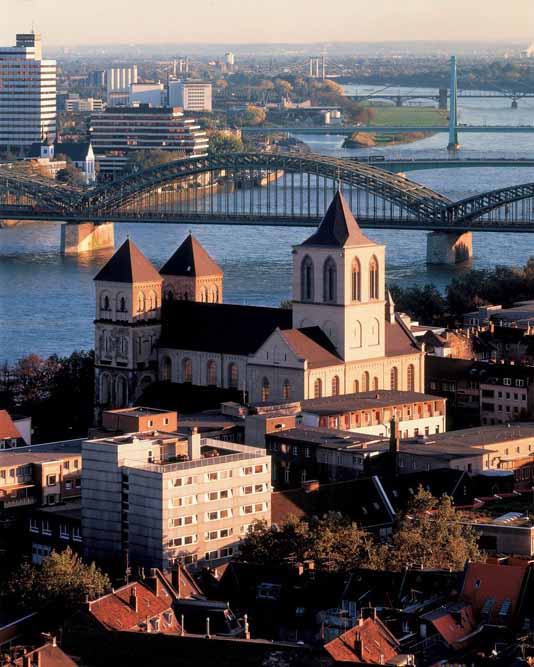
Cologne is famous for its stunning Gothic Cathedral, the Kölner Dom, which is a UNESCO World Heritage Site. Other highlights include the Roman-Germanic Museum, the vibrant Old Town with its colorful houses, and the Chocolate Museum along the Rhine River.
The best time to visit Cologne is during the spring (April to June) and fall (September to October) when the weather is mild and the city is less crowded. The famous Cologne Carnival in February is also a popular time, offering a lively and festive atmosphere.
In Cologne, you should try the local specialty Himmel un Ääd, a dish made with mashed potatoes, applesauce, and black pudding. Don't miss out on Kölsch, the local beer, and Halver Hahn, a rye bread roll with cheese.
A stay of two to three days is sufficient to explore Cologne's main attractions, enjoy its vibrant cultural scene, and take a leisurely stroll along the Rhine River. This duration allows time for both sightseeing and experiencing the local cuisine and nightlife.
Cologne has an efficient public transport system including trams, buses, and trains. The city is also very walkable, especially in the Old Town area. Renting a bike is another great way to explore the city, with many dedicated cycling paths available.
The Altstadt (Old Town) is a popular area to stay for its central location and proximity to major attractions. The Belgian Quarter offers a trendy atmosphere with cafes and boutiques, while Ehrenfeld is known for its vibrant nightlife and multicultural vibe.
Yes, consider visiting the charming town of Bonn, the former capital of West Germany, or the picturesque Drachenfels in the Siebengebirge mountains. Both are easily accessible by train and offer beautiful scenery and historical sites.
Let’s plan your next vacation
Let us take care of all the details to create the perfect trip for you. With our expertise and personalized service, we will ensure that every moment of your trip is special and unforgettable. Get ready to embark on a dream adventure!