
Details for Bergen
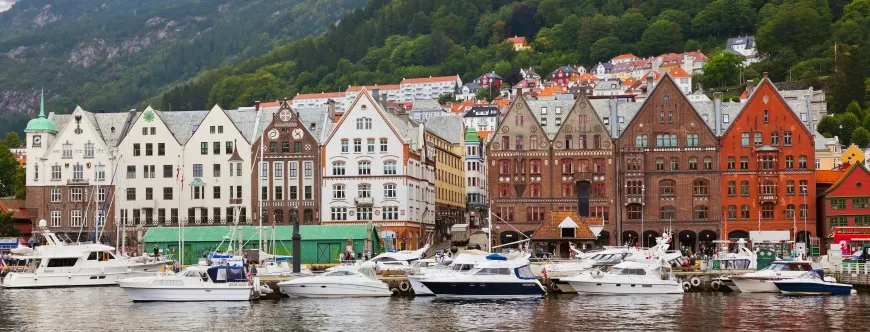

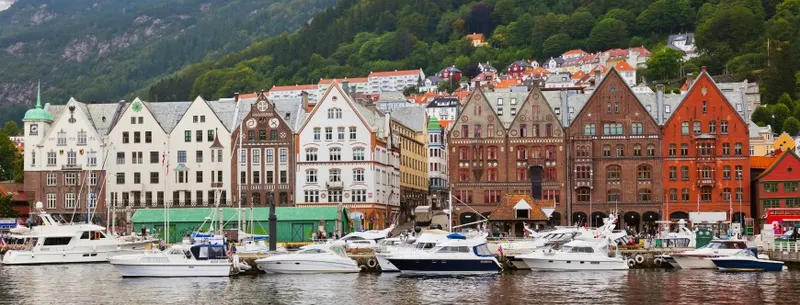
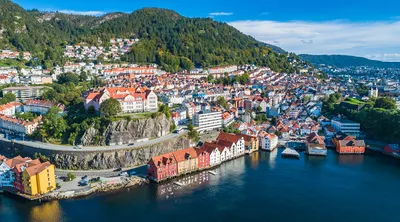
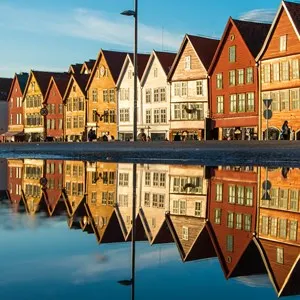
The city of Bergen is surrounded by seven mountains based around its harbour. In the Bergenhus district, there are well-preserved medieval buildings. On the other side of the harbour is the Klosteret area, which has beautiful 18th-century wooden houses and charming alleys where you can take a stroll out to the Nordnes peninsula. The city centre extends from the main square, Torget, to the Nygård area, where most shops and restaurants can be found. Bergen was involved in trade with countries all over Europe and was awarded its city charter as early as 1070 by King Olav Kyrre. Contacts with the Hanseatic League allowed Bergen to export fish and import important supplies of grain. In the harbour, which is called Vågen, you can still see parts of the Bryggen, the old Hanseatic Wharf. The old wooden buildings are on the UNESCO world heritage list and have been damaged by fire several times. From March to May, you can hear drummers marching through the streets – this is the Buekorps, a relic from the days when every Norwegian city had its own militia, but nowadays, it is children who make up the teams of drummers. Bergen has a rich cultural scene and two major festivals: Bergen Festspel and Nattjazzen. The composer Edvard Grieg grew up here and his home, Troldhaugen, has been turned into a museum. In recent years, a number of artists from Bergen, including Kings of Convenience, Annie and Röyksopp, have achieved international success.
285,900 (2021)
1 Norwegian krone = 100 öre
Police: 112
Fire brigade: 110
Ambulance: 113
Shops are open Monday to Friday from 9am to 6pm and on Saturday from 9am to 3pm. Many shops are closed on Sundays. The banks are open from 9am to 3:30pm, but most stay open later on Thursdays.



































The best time to visit Bergen is from May to September when the weather is milder and the days are longer. During this period, you can enjoy outdoor activities and festivals, such as the Bergen International Festival in May and the Bergenfest music festival in June. However, be prepared for rain, as Bergen is known for its frequent showers.
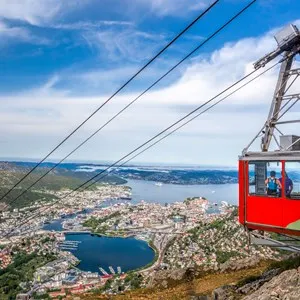
A stay of 3 to 4 days in Bergen is ideal to explore the city's main attractions and take a couple of day trips. This allows time to visit the UNESCO-listed Bryggen wharf, the Fløibanen funicular for panoramic views, and the local fish market, as well as excursions to nearby fjords.
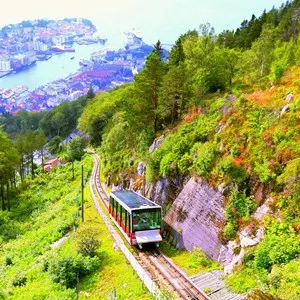
When in Bergen, don't miss the historic Bryggen district, the Fløibanen funicular for stunning views of the city, and the Bergenhus Fortress. Art enthusiasts should visit the KODE Art Museums, while nature lovers will enjoy a trip to the nearby Hardangerfjord or Sognefjord.
Bergen is a compact city with an efficient public transportation system, including buses and the Bergen Light Rail. Walking is also a great way to explore the city center. For trips outside the city, consider renting a car or joining guided tours to explore the surrounding fjords and countryside.
Bergen offers a variety of traditional Norwegian dishes. Try 'raspeballer' (potato dumplings), 'persetorsk' (pressed cod), and fresh seafood from the fish market. Don't miss out on tasting 'skillingsboller,' a local cinnamon bun, with a cup of coffee.
Bergen hosts several cultural events throughout the year. The Bergen International Festival in May is a highlight, featuring music, dance, and theater performances. Bergenfest in June is a popular music festival, and the Bergen Food Festival in September celebrates local culinary traditions.
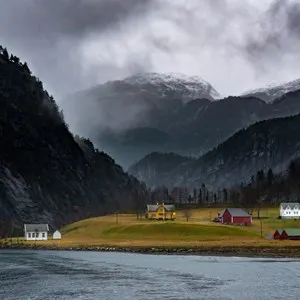
Bergen is a great base for day trips to explore Norway's stunning natural landscapes. Consider a fjord cruise to the Hardangerfjord or Sognefjord, a visit to the picturesque village of Flåm, or a scenic train ride on the Flåm Railway. Each offers a unique glimpse of Norway's breathtaking scenery.